Is That Circuit Running Hot? What GCs and Property Managers Need to Know, and What to Do About It
Warning signs of overheating circuits, safe first steps, and infrared electrical inspections for commercial buildings in Austin and Central Texas.
Quick answer: An overheating circuit can cause a burning smell, buzzing, scorch marks, warm outlets, or repeated breaker trips. Keep people away, do not open electrical panels or repeatedly reset breakers, and call a licensed electrician. If there is smoke, fire, or active sparking, evacuate and call 911.
Most electrical fires don't start with a bang. They start quietly. A loose connection behind a cover plate. A breaker that's been carrying too much load for too long. A wire that's been getting a little warmer every day for months. By the time anybody smells something, that problem has usually been talking for a while. Nobody was in a position to hear it.
KDR has been wiring and servicing commercial buildings around Austin since 2001. The number one thing we tell general contractors and property managers is simple: you don't need to be an electrician to catch a problem early. You just need to know what to look for, what to do in the first five minutes, and when to hand it off.
That's what this article covers.
Why This Matters to You
For a GC, it's your jobsite, your crew, your schedule, and your name on the project. For a property manager, it's your tenants, your building, and the call you get at 2 a.m.
The numbers are real. The U.S. Fire Administration estimates that electrical malfunctions caused about 7,400 fires in nonresidential buildings in 2023, with roughly $354 million in property loss. Year after year, electrical malfunction ranks among the leading causes of dollar loss in nonresidential building fires.
The cost isn't only fire damage, either. It's a tenant who can't open for a week. It's a failed inspection that pushes your closeout. It's an insurance claim that raises questions about maintenance records.
The good news: most of these problems give off warning signs long before they turn into a fire. Catching them isn't about luck. It's about paying attention.
What We Mean by a "Hot Circuit"
In the field, "hot" means two different things, and both matter:
- An overheating circuit. Something is generating heat it shouldn't: a loose or corroded connection, an overloaded circuit, a failing breaker, or damaged wire. This is the fire risk, and it's the main focus of this article.
- A live (energized) circuit. Power is present. That's normal. The danger comes when someone thinks a circuit is off and it isn't. That's the shock risk, and we cover it below.
How to Recognize an Overheating Circuit
Use your senses. You don't need tools, and you shouldn't open anything to check.
What you might see
- Brown, black, or scorch marks around outlets, switches, or panel covers
- Melted or discolored plastic on devices, cords, or plugs
- Lights that dim or flicker when equipment kicks on
- Sparks when something is plugged in or switched on
What you might smell
- A burning plastic or "hot electronics" smell with no obvious source. Take this one seriously. It's often the first sign anyone notices.
What you might hear
- Buzzing, crackling, or sizzling from an outlet, switch, fixture, or panel
What you might feel
- A switch plate or outlet cover that's warm to the touch (a dimmer can run slightly warm, but it shouldn't be hot)
- A panel door or cover that's noticeably warmer than the wall around it
- A plug or cord that's hot after normal use
How the system behaves
- A breaker that keeps tripping. A breaker trips to protect the circuit. If it keeps tripping, it's telling you something. Resetting it over and over just silences the warning.
- Tenants reporting outlets or equipment that "act up" in one area
Common culprits we see on jobsites and in buildings
- Temporary power and extension cords that get run over, pinched, daisy-chained, or asked to do a permanent job
- Tenant load creep, where more equipment gets added to circuits than they were designed for
- Connections that loosen over time from heat cycles and vibration
- Water intrusion near panels or devices
What to Do: De-energizing Safely (for Non-Electricians)
If you notice any of the signs above, here's what to do. These steps are about keeping people safe and getting power off the problem without putting yourself at risk.
If you see smoke, flames, active sparking, or a strong burning smell
- Get people out and call 911. Don't investigate. Buildings can be replaced.
- Never use water on an electrical fire. Only use an extinguisher rated for electrical fires (Class C, or a multipurpose ABC), and only if the fire is small, you've been trained, and you have a clear way out.
If there's no fire, but something is clearly wrong
- Don't touch it. Keep your hands off the device, cord, or equipment. Keep other people back.
- Turn off the breaker at the panel, but only if it's safe. Find the breaker that's clearly labeled for that circuit and switch it off. Make sure your hands are dry and you're not standing in water. Stand to the side of the panel, not directly in front of it. Don't reach through or around damaged equipment to get there.
- If you can't tell which breaker it is and it's urgent, shut off the main disconnect if you know where it is and can reach it safely. Otherwise, clear the area and call for help.
- Don't reset a breaker that's been tripping repeatedly, or one that tripped alongside heat, smell, or noise.
- Leave it off and let people know. Put a note on the panel ("Do not turn on. Electrician called.") and tell your team or tenants.
- Call a licensed electrician. Describe what you saw, smelled, and heard. The details help us bring the right equipment and parts.
What not to do
- Don't remove panel covers, open junction boxes, or pull devices out of the wall
- Don't assume a device is safe because the light is off or the switch is down
- Don't tape over a problem, swap in a bigger breaker, or "just see if it happens again"
Never Assume It's Dead
This is the part that hurts people on jobsites. A switch in the "off" position doesn't mean a circuit is de-energized. Panels get mislabeled. Circuits get tied together during renovations. Generators and other sources can backfeed. We've all seen a panel schedule that doesn't match what's actually in the wall.
That's why electricians don't just flip a breaker and go to work. Qualified electricians follow a formal process under NFPA 70E and OSHA lockout/tagout rules. We isolate the source, lock and tag it, then test to verify zero voltage before anyone touches a conductor. That process takes training, the right PPE, and properly rated test equipment.
For GCs and PMs, the takeaway is simple. Shutting off a breaker is how you make things safer while you wait. It is not how you make something safe to work on. That call belongs to a qualified electrician.
The Best Hot Circuit Is the One You Find Before It Gets Hot
Everything above is about reacting. The better move is catching problems before anyone smells smoke.
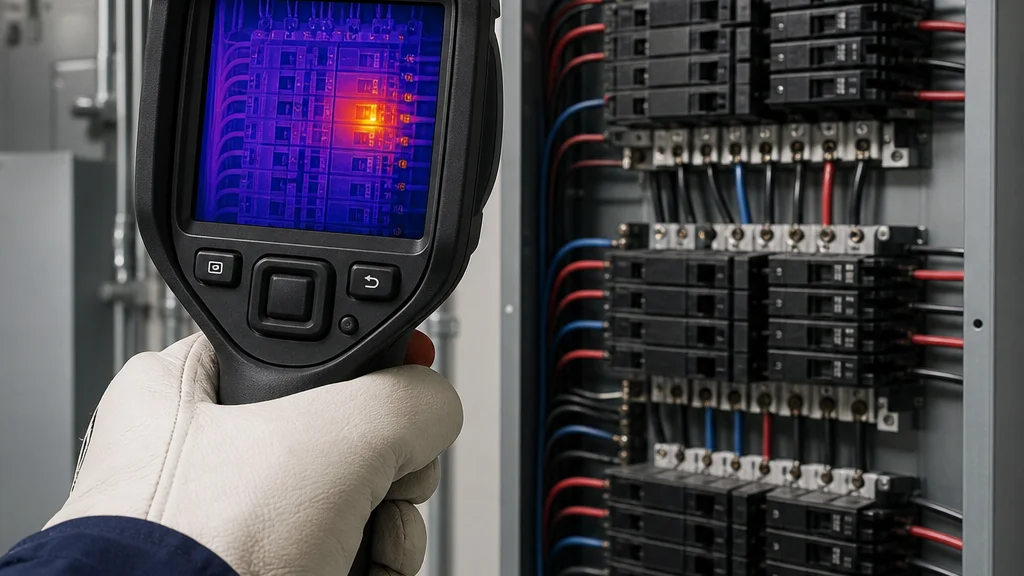
That's what infrared (IR) thermography does. With a thermal camera, we scan panels, switchgear, disconnects, and connections while they're running under normal load. Loose connections, overloaded circuits, and failing components show up as hot spots, often months before you'd ever see a scorch mark. There's no shutdown, and there's no disruption to tenants or your schedule.
This isn't just good practice anymore. The 2023 edition of NFPA 70B, the Standard for Electrical Equipment Maintenance, changed from a recommended practice to a standard. It calls for infrared inspection of electrical equipment at least every 12 months as part of a documented electrical maintenance program, and more often for equipment in poor condition. More insurers are asking about it too.
For property managers, an annual IR scan gives you documented proof that your electrical system is being maintained. That's useful for insurance, for owners, and for your own peace of mind.
For GCs, a scan before turnover can catch installation issues, like a connection that wasn't torqued right, before they become your warranty call.
Why KDR
KDR Electric Services is a commercial electrical contractor headquartered in northwest Austin. We've been building, maintaining, and troubleshooting electrical systems for GCs, property managers, and facilities teams across Central Texas since 2001. We hold Texas Electrical Contractor License #17452, and our founder, Ken Jahns Sr., holds Texas Master Electrician License #42704. KDR is certified to perform electrical thermal imaging and reporting as part of annual preventive maintenance.
We're not here to scare anybody. Most buildings we scan are in good shape. When we do find something, it's usually a quick, inexpensive fix, because it was caught early. That's the point.
When you call us, you get electricians who have wired the kind of buildings you build and manage. We'll tell you straight what we found, what matters, and what can wait.
Schedule an Infrared Scan
Whether you're turning over a new building or managing one that's been running for years, an infrared scan is the easiest way to know where you stand.
Book a thermal imaging scan with KDR or call us at (512) 832-6955. Ask for Ethan.
Quick-Reference Checklist: Hot Circuit Warning Signs
Print this and post it in your job trailer or maintenance office.
- Burning plastic smell with no obvious source
- Scorch marks or discoloration on outlets, switches, or panels
- Outlet or switch covers warm to the touch
- Buzzing, crackling, or sizzling sounds
- A breaker that trips repeatedly
- Lights that flicker or dim when equipment starts
- Melted or hot plugs and cords
If you notice any of these: don't touch it, keep people back, turn the breaker off if it's safe, don't reset it, tag it, and call a licensed electrician. Smoke or fire? Get out and call 911.
Frequently asked questions
Is a warm outlet or switch plate normal?
A dimmer switch can run slightly warm. Standard outlets and switches shouldn't. If a cover plate feels hot, or warmer than it used to, turn off the circuit and have it checked.
Can I just keep resetting a breaker that trips?
No. A breaker that trips repeatedly is warning you that something is wrong: an overload, a short, or a failing component. Resetting it over and over removes the protection it's providing. Leave it off and call an electrician.
Is turning off the breaker enough to make a circuit safe to work on?
No. Turning off the breaker reduces risk while you wait for help. Before anyone works on a circuit, a qualified electrician needs to lock it out, tag it, and test to verify it's de-energized.
What is infrared thermography, and does it disrupt building operations?
It's a scan with a thermal camera that shows hot spots in electrical equipment while it's running normally. No shutdown is required, so tenants and operations aren't disrupted.
How often should a commercial building get an infrared scan?
NFPA 70B (2023) calls for infrared inspection of electrical equipment at least once every 12 months, and more often for equipment in poor condition. Your insurer may have its own requirements.
Who should I call if I spot one of these warning signs in Austin?
If there's smoke or fire, call 911 first. For everything else, call a licensed commercial electrical contractor. In Austin and Central Texas, KDR Electric Services can inspect, repair, and set you up with an annual thermal imaging program. Call (512) 832-6955 or book online.
Sources
- U.S. Fire Administration, Nonresidential Building Electrical Malfunction Fire Trends (2014 to 2023)
- U.S. Fire Administration, Nonresidential Building Fire Dollar-Loss Causes (2014 to 2023)
- NFPA 70B (2023), Standard for Electrical Equipment Maintenance, overview via Fluke
- NFPA 70E, Standard for Electrical Safety in the Workplace; OSHA 29 CFR 1910.147 (Control of Hazardous Energy, Lockout/Tagout)
- KDR company details: austinelectricalservice.com